
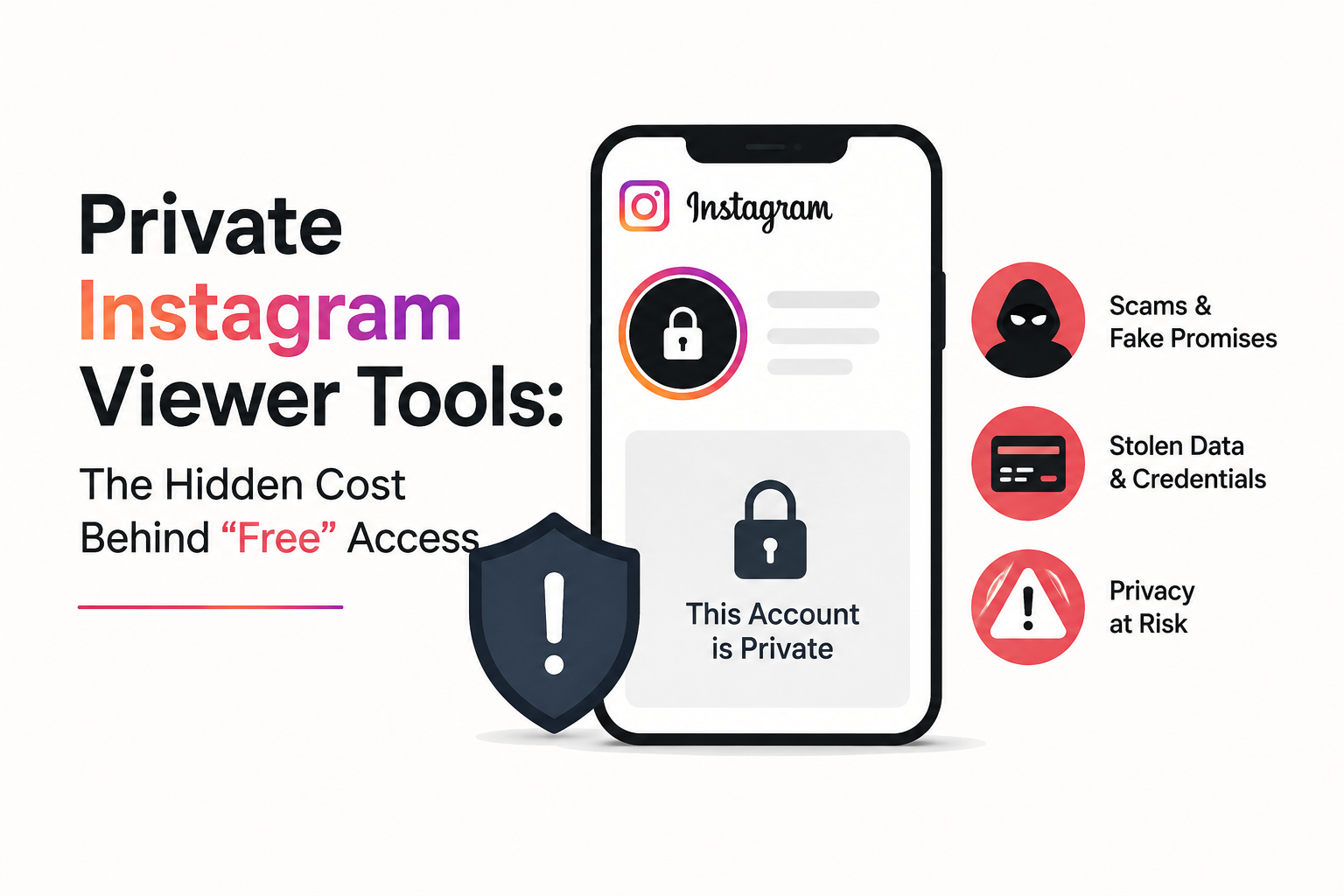
Anyone who has spent time scrolling through Instagram has probably run into a profile with a small padlock icon next to the username. That padlock means the account is private, and unless you’re an approved follower, you can only see the person’s name, profile photo, and a short bio. For the curious, the frustrated, or the simply nosy, this locked door has created an entire cottage industry of websites and apps promising a way around it. Search for a “private Instagram viewer” and you’ll find dozens of results claiming to unlock private profiles in seconds, no login required, completely anonymous. Before you type a username into one of these tools, it’s worth understanding what they actually do, why they exist, and what the real risks are.
Why Private Accounts Exist in the First Place
Instagram introduced the private account option because not everyone wants their content visible to strangers. Teenagers protecting themselves from unwanted attention, professionals who want to separate their personal life from their public persona, and people who have experienced harassment or stalking all rely on this setting. When someone sets their account to private, Instagram’s system checks every single request to view their content, whether that request comes from a browser, an app, or a script. There is no legitimate backdoor into this system. Any tool that claims to bypass it is either lying about what it does or exploiting a loophole that Instagram has almost certainly already closed, because privacy settings are a core part of the platform’s trust with its users.
How These “Viewer” Tools Actually Work
Most sites offering a private Instagram viewer follow a similar pattern. You enter the username you want to view, the site runs some kind of “processing” animation, and then it asks you to complete a task before revealing the content, things like filling out a survey, downloading an app, entering your own Instagram credentials, or verifying you’re human through a series of ad-laden pages. In the vast majority of cases, the private content never appears. What actually happens is one of a few things:
The site is collecting your personal information, email address, or phone number to sell to marketers or use for spam. The site is trying to get your own Instagram login credentials, which it can then use to hijack your account, post spam, or access your private messages and personal data. The site is generating ad revenue by keeping you clicking through pages, regardless of whether it delivers anything useful. Some tools do show generic, publicly available data, like a profile picture or bio, and present it as if they’ve “unlocked” something, when in reality that information was never private to begin with.
There are also occasional cases of genuine data scraping services that gather and repost information from accounts that were public at some point, then stitch it into a fake “live” private viewer experience. This content can be outdated, inaccurate, or entirely fabricated to keep users engaged with the site. The Federal Trade Commission has published general guidance on recognizing and avoiding phishing scams that applies directly to how many of these “viewer” sites operate.
The Legal and Ethical Side of the Question
Setting aside whether these tools function as advertised, it’s worth pausing on the intent behind using one. If someone has made their account private, they’ve made a deliberate choice about who gets to see their posts, stories, and photos. Trying to circumvent that choice, even out of simple curiosity, sidesteps a decision that person made about their own privacy. In many regions, unauthorized access to someone’s private data or accounts can carry legal consequences under computer misuse or privacy laws, particularly if any part of the process involves phishing for login credentials or impersonating the platform. Even when no law is technically broken, there’s a meaningful ethical difference between browsing what someone has chosen to share and actively working around a boundary they set.
This matters even more in situations involving an ex-partner, a person you had a falling out with, or someone who blocked you. Repeated attempts to view a private account after being blocked or after a relationship has ended can shade into behavior that feels like surveillance from the other side, even if that’s not the intention. Organizations like the Cyber Civil Rights Initiative offer resources for anyone who feels they are being monitored or harassed online, regardless of which platform is involved.
What Happens If You Actually Try One
If you’re weighing whether to try one of these services, it helps to know the typical outcome. Cybersecurity researchers and consumer protection groups have looked into many of these sites over the years, and the pattern is consistent: the promised feature doesn’t work, but the site succeeds at collecting something from the visitor, whether that’s ad impressions, personal data, or account credentials. Some versions ask you to download a browser extension or mobile app to “verify” you’re not a bot; these downloads have in some cases been found to contain adware or tracking software that continues operating long after you’ve forgotten about the original search. Because these sites often live outside of official app stores or use third-party ad networks with limited vetting, the usual safety checks that catch malicious software don’t always apply.
Safer Ways to Handle Curiosity About a Private Account
If your goal is simply to see someone’s posts and you don’t already follow them, the straightforward route is to send a follow request. Most people accept requests from acquaintances, coworkers, or people they recognize, and if they don’t, that’s a signal about their own comfort level that’s worth respecting. If you already know the person, a mutual friend who follows them might be willing to show you a specific post, though it’s courteous to ask rather than assume.
For parents concerned about a child’s activity on the platform, Instagram has built-in supervision tools that let a parent link their account to their teen’s account with the teen’s knowledge and consent, providing visibility into who they follow, time spent on the app, and reported content, without resorting to a shady third-party site. You can find setup instructions directly through Instagram’s official Family Center. This approach also has the benefit of opening a conversation about online safety rather than quietly spying from the outside.
If you suspect an account is impersonating you, harassing you, or violating platform rules, Instagram’s own reporting and support tools allow you to flag accounts for review even if you can’t see their private content directly. This is a far more reliable route than any third-party viewer, and it doesn’t put your own data at risk.
Protecting Your Own Account From These Tools
It’s also worth flipping the question around. If you’re the one with a private account, understanding how these viewer tools operate can help you recognize warning signs, like a follow request from an account with no posts and a generic name, or unexpected direct messages claiming your account has been “found” by a viewer tool and asking you to click a link. These are frequently phishing attempts dressed up as notifications from a private-viewer service. Never enter your Instagram username and password on any site other than Instagram’s own official app or website, and be cautious about follow requests from accounts that seem to have appeared purely to test whether your privacy settings can be bypassed.
The Bottom Line
A tool that promises to reveal private Instagram content without permission is, almost without exception, either non-functional or actively working against the interests of the person using it. The technical reality is that Instagram’s privacy system doesn’t have a public loophole sitting around waiting to be exploited by a website that also happens to run intrusive ads. If you want to see what someone has chosen to keep private, the honest path is to ask, whether that’s sending a follow request or having a direct conversation. It respects the other person’s decision, and it doesn’t put your own information at risk in the process.
Final Thoughts
The appeal of a private Instagram viewer comes from a very human place, curiosity about someone we can’t quite see the full picture of. But the gap between that curiosity and what these tools actually deliver is enormous. Nearly every version of this service is built to profit from the person searching for it, not to genuinely unlock anyone’s private content. The safest, most reliable, and frankly most respectful approach is still the simplest one: send a follow request, have an honest conversation, or use the official tools Instagram already provides for safety and parental oversight. Protecting your own account matters just as much as respecting someone else’s boundaries, so stay alert to phishing attempts disguised as viewer tools, keep two-factor authentication turned on, and remember that if a service sounds too easy to be true, it almost certainly is.
