


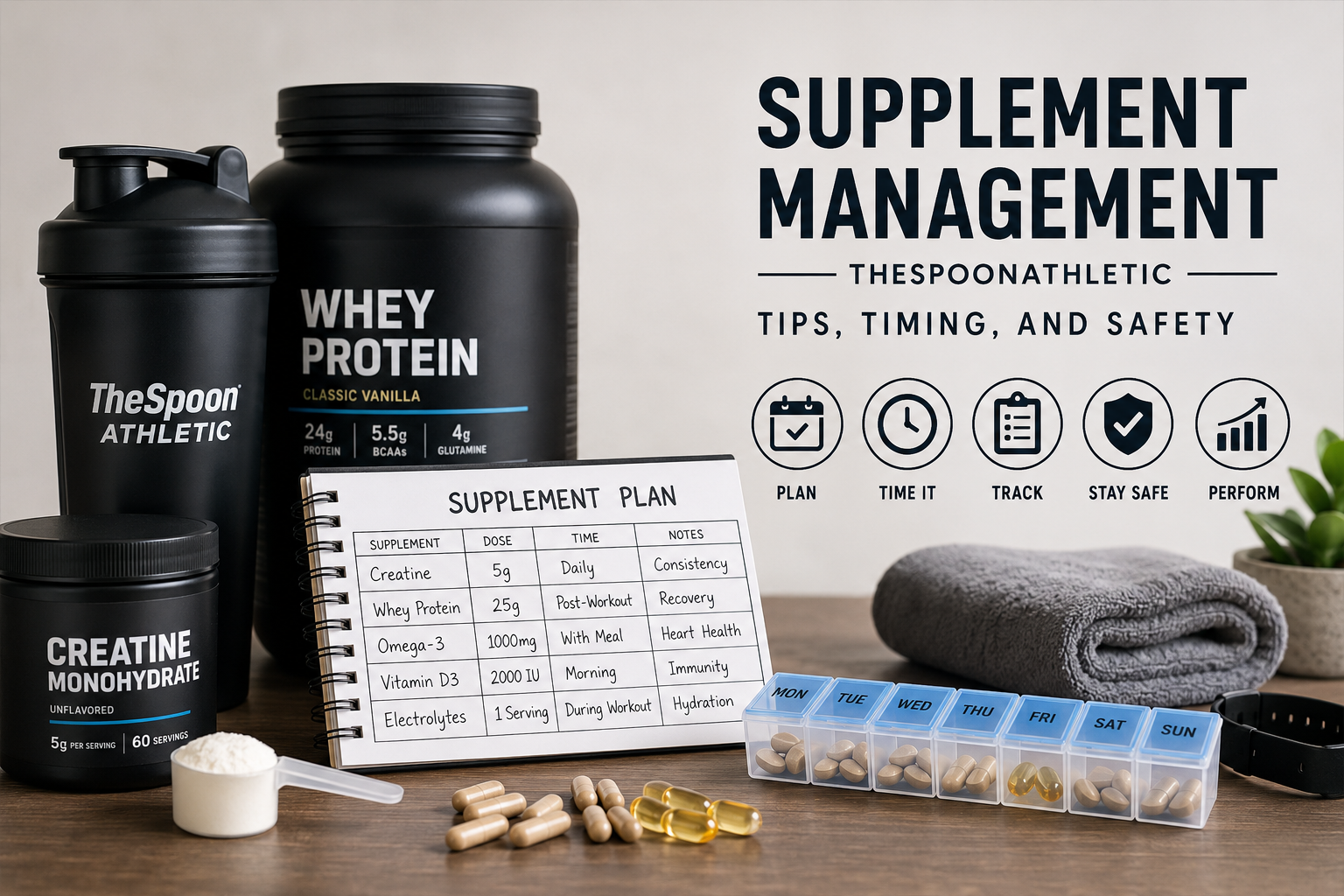
Athletes today have more supplement choices than at any point in sports history. Protein powders, creatine, electrolytes, multivitamins, omega-3s, pre-workouts — the shelf keeps growing, and so does the confusion around how to actually use these products well. That confusion is exactly why Supplement Management TheSpoonAthletic deserves more attention than it usually gets. It isn’t about buying the “right” product once and forgetting about it. It’s an ongoing process of choosing, timing, tracking, and adjusting what you take so that it actually supports your training instead of sitting unused in a cabinet or, worse, working against your goals.
This guide walks through what supplement management really means for athletes, why it matters, and how to build a system that fits your training life rather than one that adds another chore to it.
What Supplement Management Actually Means
At its core, supplement management is the practice of organizing, monitoring, and adjusting your intake of dietary supplements based on your training load, goals, health status, and how your body responds over time. It covers several moving parts:
Choosing supplements based on evidence and personal need rather than trends or marketing claims. Timing doses around training, meals, and sleep so they do what they’re meant to do. Tracking what you take, how much, and how consistently, so you can spot patterns. Reviewing and adjusting your stack every few months as your training cycle, goals, or health changes. Storing products properly so they don’t degrade before you use them.
Most athletes do one or two of these things well and neglect the rest. Someone might be diligent about buying quality creatine but have no idea whether they’re actually taking it consistently enough to see results. Someone else might track everything in a notebook but never revisit whether last year’s stack still matches this year’s training block. Real supplement management ties all of these pieces together.
Why Athletes Need a System, Not Just a Shopping List
A common mistake is treating supplementation as a purchasing decision rather than an ongoing practice. You research a product, buy it, take it for a couple of weeks, and then either forget about it or keep taking it out of habit long after it’s stopped being useful. Neither outcome serves your training.
A proper system solves three specific problems.
Consistency. Many supplements, creatine being the clearest example, work through saturation over time rather than a single dose. Skipping days randomly undermines the entire point of taking them. A system built around reminders, routine stacking with existing habits (like taking it with breakfast), or simple tracking apps closes this gap.
Redundancy and waste. Without oversight, it’s easy to end up with three different magnesium products bought at different times, each half-finished, because there was no visibility into what was already on hand. Managing your supplement inventory the same way you’d manage a pantry prevents this kind of overlap and waste.
Safety. Some combinations of supplements, or supplements taken alongside medications, carry real interaction risks. Iron and calcium compete for absorption. Certain herbal supplements can interact with blood thinners or affect liver enzymes. Without a clear record of what you’re taking, it becomes harder to have an informed conversation with a doctor or dietitian if something feels off. The National Institutes of Health’s Office of Dietary Supplements keeps updated, evidence-based fact sheets on individual supplements and their interactions, and it’s worth checking before adding anything new to a long-term routine (https://ods.od.nih.gov/factsheets/list-all/).
Building a Supplement Stack That Matches Your Training
Rather than starting from a list of trending products, it helps to start from your actual training demands and work backward.
Endurance athletes typically lean more on electrolytes, carbohydrate support during long sessions, and iron monitoring, since endurance training increases iron turnover. Strength and power athletes tend to prioritize creatine monohydrate, protein intake around training windows, and sometimes caffeine timed before heavy sessions. Athletes in weight-class or physique sports often need closer attention to micronutrient adequacy, since calorie restriction can create gaps that a general multivitamin doesn’t fully cover.
None of this replaces food. Supplements are meant to fill specific, identified gaps — not to substitute for a solid training diet. If you’re unsure where your gaps actually are, a blood panel and a conversation with a sports dietitian will tell you far more than another product review will. TheSpoonAthletic’s nutrition section has broader guidance on building a training diet before layering supplements on top of it, which is the right order to approach this in.
Timing and Dosage: The Part Most People Get Wrong
Buying good supplements is only half the equation. Timing determines whether they actually do their job.
Creatine doesn’t need to be taken immediately before or after training — what matters is daily consistency, typically around 3 to 5 grams a day. Protein is more useful spread across the day in servings your body can actually use at once, rather than one large dose. Caffeine-based pre-workouts work best taken 30 to 45 minutes before a session, and taking them too late in the day can quietly wreck sleep quality, which then undermines recovery — an ironic way for a “performance” supplement to backfire. Fat-soluble vitamins like D, E, and K absorb better when taken with a meal that contains some fat, rather than on an empty stomach.
Dosage also isn’t static. What worked during an off-season block might be excessive or insufficient during a competition phase. This is where the “management” part of supplement management really shows its value: reviewing your stack against your current training phase, not just running the same routine year-round.
Tracking Without Overcomplicating It
You don’t need an elaborate spreadsheet to manage supplements well, but you do need some form of record. A simple approach that works for most athletes:
Keep a running list of everything currently in rotation, including dose and time of day. Note the start date for anything new, so you can evaluate it after a reasonable trial period — usually four to eight weeks for most performance supplements. Record any side effects, even minor ones, since patterns matter more than isolated incidents. Set a recurring reminder, monthly or quarterly, to review the whole list and cut anything that isn’t earning its place.
This kind of light tracking also makes conversations with coaches, physicians, or dietitians far more productive, since you can hand over an accurate picture instead of trying to recall it from memory during an appointment.
Quality and Safety Checks Before You Buy
Supplement regulation varies significantly by country, and in many markets, products aren’t required to prove effectiveness before hitting shelves. This makes third-party testing a meaningful safeguard, especially for competitive athletes subject to anti-doping rules. Certification programs like NSF Certified for Sport and Informed-Sport test finished products for banned substances and label accuracy, which matters given that contamination in supposedly “clean” supplements has caused real doping violations in the past (https://www.nsfsport.com/).
Before adding anything new to your stack, it’s worth checking that the product has been tested by one of these programs if you compete under drug-testing rules, verifying the label lists exact doses rather than vague “proprietary blends,” and cross-checking any bold claims against independent research rather than the brand’s own marketing copy.
When to Bring in a Professional
Self-managed supplementation works fine for general wellness products like a basic multivitamin or vitamin D during winter months. It works less well once you’re combining multiple products, managing a medical condition, or training at a volume that puts real strain on your body’s nutrient reserves. A registered dietitian, ideally one with sports nutrition experience, can review your full stack, flag redundant or conflicting products, and identify gaps a supplement alone won’t fix. This is a good complement to the training-focused advice available elsewhere on TheSpoonAthletic, since nutrition and training decisions really shouldn’t be made in isolation from each other.
Final Thoughts
Supplement management isn’t about having the most complete cabinet or the trendiest stack — it’s about running a small, deliberate system around a handful of products that are actually doing something for your training. Start with what your training demands, add only what fills a genuine gap, track it honestly, and revisit the whole setup regularly instead of letting it run on autopilot. Done this way, supplementation stops being guesswork and becomes just another well-managed part of your athletic routine, alongside the training and nutrition planning covered elsewhere on TheSpoonAthletic.
