


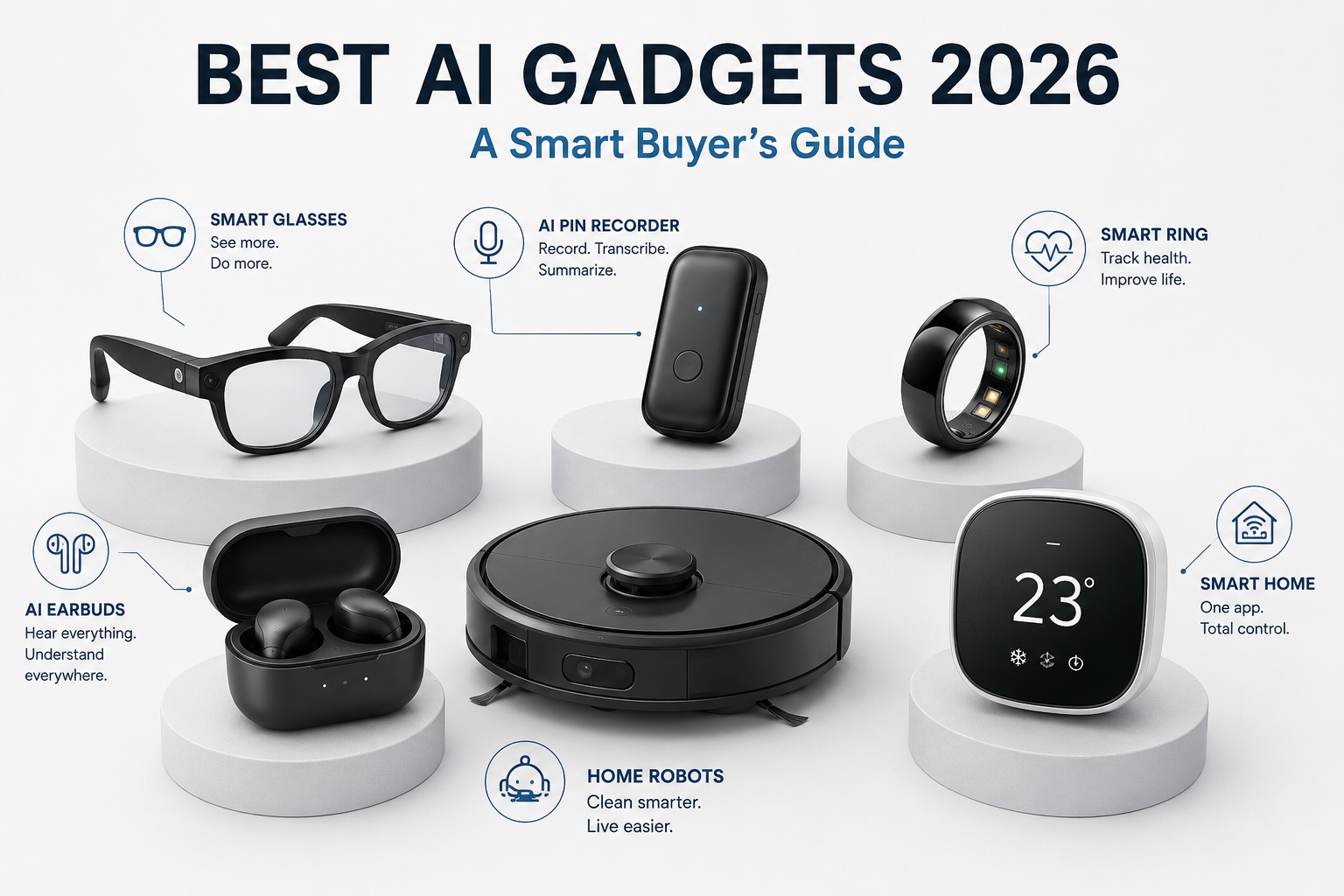
Walk into any electronics store today, or scroll through five minutes of tech content online, and you’ll notice something odd: almost every gadget now claims to have “AI” stamped somewhere on the box. Earbuds, water bottles, toothbrushes — even backpacks. But most of that is marketing noise. Only a small slice of these devices actually use AI in a way that changes how you live day to day.
That’s exactly why the search for the best AI gadgets 2026 has to buyers has gotten harder, not easier. More choice usually means more confusion, and this year is no exception. So we broke the market down by category, looked at what’s actually delivering real value versus what’s just riding the AI label for attention, and put together a practical guide you can actually use before you spend money.
Why “Best AI Gadgets 2026” Looks So Different From a Few Years Ago
A few years back, “smart” devices were mostly reactive — you gave a command, and the gadget responded. That was the entire relationship. In 2026, the better devices have shifted toward something closer to anticipatory. Instead of waiting for instructions, they observe patterns in your behavior and quietly step in before you even ask.
This shift matters because it changes what counts as a genuinely useful AI gadget. A smart speaker that just answers trivia questions isn’t really doing anything new. A wearable that notices your recovery is poor and nudges your calendar to lighten up, or a ring that flags an unusual overnight heart rate pattern before you feel anything — that’s a meaningfully different category of product. When you’re evaluating any device marketed under the best AI gadgets 2026 banner, this is the first filter worth applying: does it observe and act, or does it just wait around like every other gadget from five years ago?
Wearable AI: From Voice Recorder to Personal Assistant
Pin-style AI recorders are probably the clearest example of this shift working in practice. Clip one to your shirt before a meeting, and it transcribes the conversation, labels who said what, and hands you a clean summary the moment the meeting wraps up — no phone required, no manual note-taking. For students, journalists, and anyone who spends their day in meetings or lectures, this single feature can realistically save several hours a week.
Some of the newer pin-style devices go a step further, running on top of large language models to generate structured action items rather than just a transcript, and supporting well over a hundred languages with automatic speaker labeling. That’s a genuinely different experience than the voice recorders of even two or three years ago, which just captured raw audio and left you to sort through it.
The catch, and it’s worth being upfront about it: most of these devices lean on a “Pro” or “Unlimited” subscription to unlock their best features. A device that looks affordable at checkout can end up costing considerably more over a year once you factor in the monthly fee, so read the fine print before you commit.
For a hands-on look at which wearables and other devices have actually impressed reviewers this year, TechRadar’s roundup of the best tech of 2026 so far is a solid, high-traffic resource worth checking before you buy.
Smart Glasses and Earbuds: AI You Actually Wear
Smart glasses have quietly become one of the most practical categories in this whole conversation. The current generation looks close enough to ordinary eyewear that most people won’t clock them as “tech” at a glance, while running real-time object identification, hands-free video capture, and live translation across multiple languages under the hood. For travelers who don’t want to keep pulling out a phone every time they need to read a menu or ask for directions, this is one of the rare AI features that solves a problem you actually have, rather than one a marketing team invented.
Premium earbuds are chasing a similar goal from a different angle. Live spoken-language translation, built directly into the earpiece, is aimed squarely at commuters and frequent flyers rather than gamers or audiophiles — and it’s becoming a genuine differentiator between flagship earbuds rather than a gimmick buried in a features list nobody reads.
Health Wearables: Rings, Trackers, and Screenless Data
Smart rings and screenless fitness trackers are having a real moment, and for a simple reason: they collect meaningful health data — sleep stages, heart rate variability, blood oxygen, resting heart rate — without demanding a charger-hungry watch on your wrist all day. A growing number now skip the monthly subscription entirely for core features, which is a welcome shift from where this category sat a couple of years ago, when almost every serious health metric was locked behind a paywall.
It’s worth being realistic about what this data is actually for, though. A single “bad” recovery score or an unusual overnight reading is almost never medically significant on its own, and some users end up checking their metrics dozens of times a day, which tends to create more anxiety than insight. If you pick up a health wearable this year, set a single daily check-in time, turn off non-critical push notifications, and treat the AI coaching as a general trend indicator rather than a daily verdict on your health.
Smart Home Gadgets: Interoperability Finally Arrives
Smart home devices in 2026 have moved past the “five different apps for five different brands” problem that made the category frustrating for years. Broader adoption of a shared connectivity standard means gadgets from different manufacturers can increasingly work together under a single app, instead of forcing you to juggle separate ecosystems just to turn a light on.
AI-driven thermostats that learn a household’s actual patterns — rather than relying on a fixed schedule you set once and forgot about — are also becoming genuinely good at reducing utility bills without requiring constant manual adjustment. Multi-room audio and smarter security systems, combining cameras, motion sensors, and facial recognition, round out a category that finally feels coherent rather than like a pile of disconnected gadgets.
Home Robots: Cleaning That Thinks
Robot vacuums and mops have moved well past bumping randomly into furniture. The better models this year map a home properly, avoid pet messes instead of smearing them across the floor, and empty themselves — genuinely “set and forget” for busy households. Some newer releases blend cleaning with light general-assistant duties, using onboard cameras to flag unusual activity around the house while they work.
If you’re shopping in this category specifically, prioritize proper navigation and app-based mapping over flashy marketing language — the difference between a device that actually learns your floor plan and one that just bounces around randomly is the single biggest factor in whether you’ll still be using it in six months.
What to Check Before You Buy Any AI Gadget
Before adding anything to your cart, it helps to run it through a short filter:
- Does it solve one job you already repeat? Devices tied to a recurring task — commuting, meetings, sleep tracking — stay in daily use. Novelty gadgets tend to get unplugged within a few weeks.
- On-device or cloud processing? This affects both response speed and how much of your personal data leaves the device.
- Is there a hidden subscription? A cheap upfront price sometimes hides a recurring fee behind the device’s best AI features.
- How’s the battery life in real use, not on paper? Marketing numbers rarely match daily performance once you factor in always-on sensors.
- Does the brand ship regular software updates? A lot of the “AI” in these devices lives in the software layer, so a gadget with active updates tends to actually improve over time rather than feeling dated within a year.
If you’re building out a wider tech setup this year rather than buying a single device, our Gadgets EuroTechTalk Playbook covers smarter buying decisions across categories in more depth. And if AI hardware has you curious about where the software side of the industry is heading too, it’s worth reading how AI’s grace period is officially over as the wider industry shifts from hype toward accountability.
Bottom Line
The list of best AI gadgets 2026 has to offer has finally started earning its keep — but only the devices built around a single, repeatable job actually hold up past the first few weeks. Skip anything promising to do everything at once; that’s usually the category that fades fastest and ends up in a drawer. Pick the device that removes one real friction point from your day, check the subscription terms before you buy, and you’ll end up with something you’re still using well into next year — not just another gadget with a good launch trailer.
